

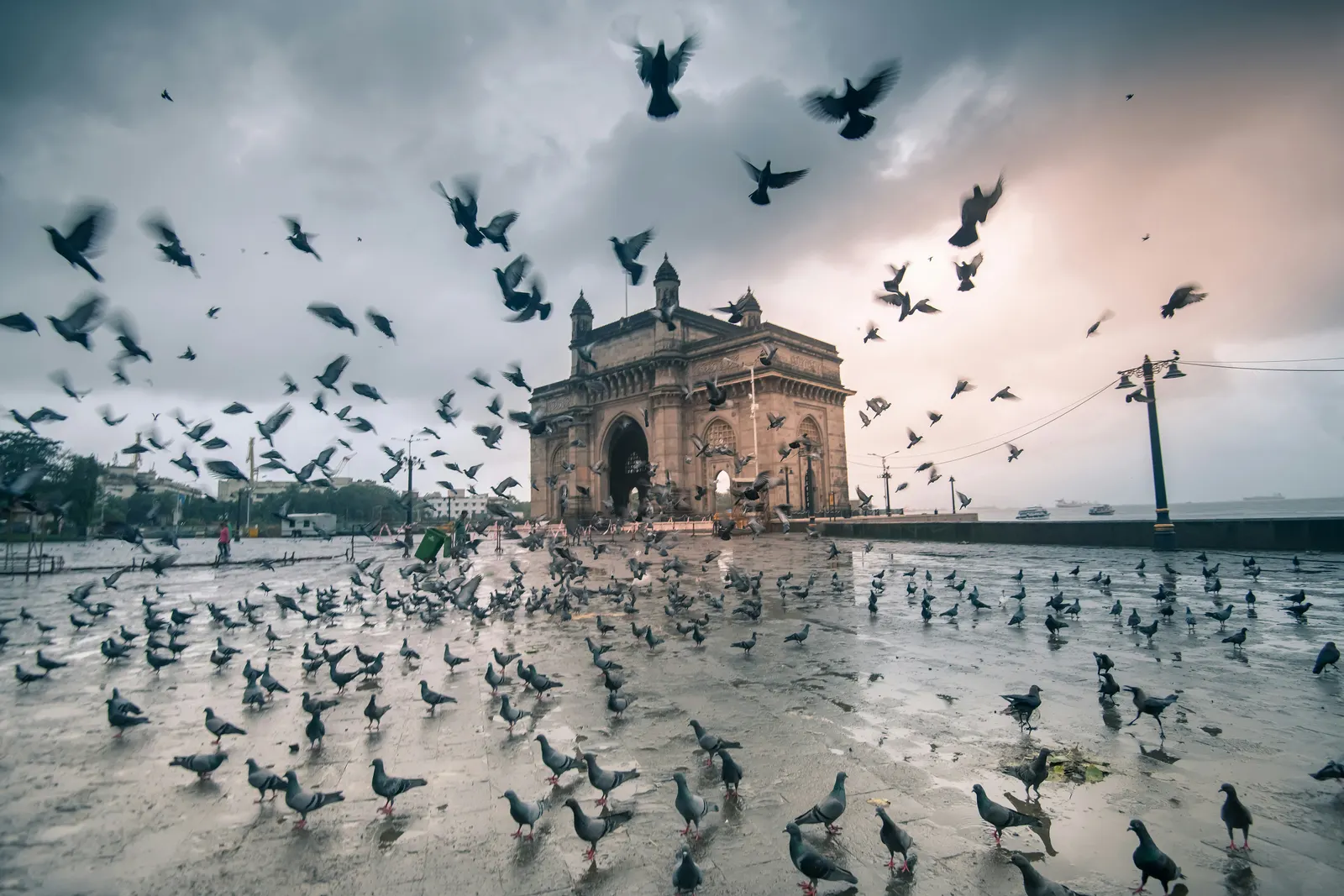
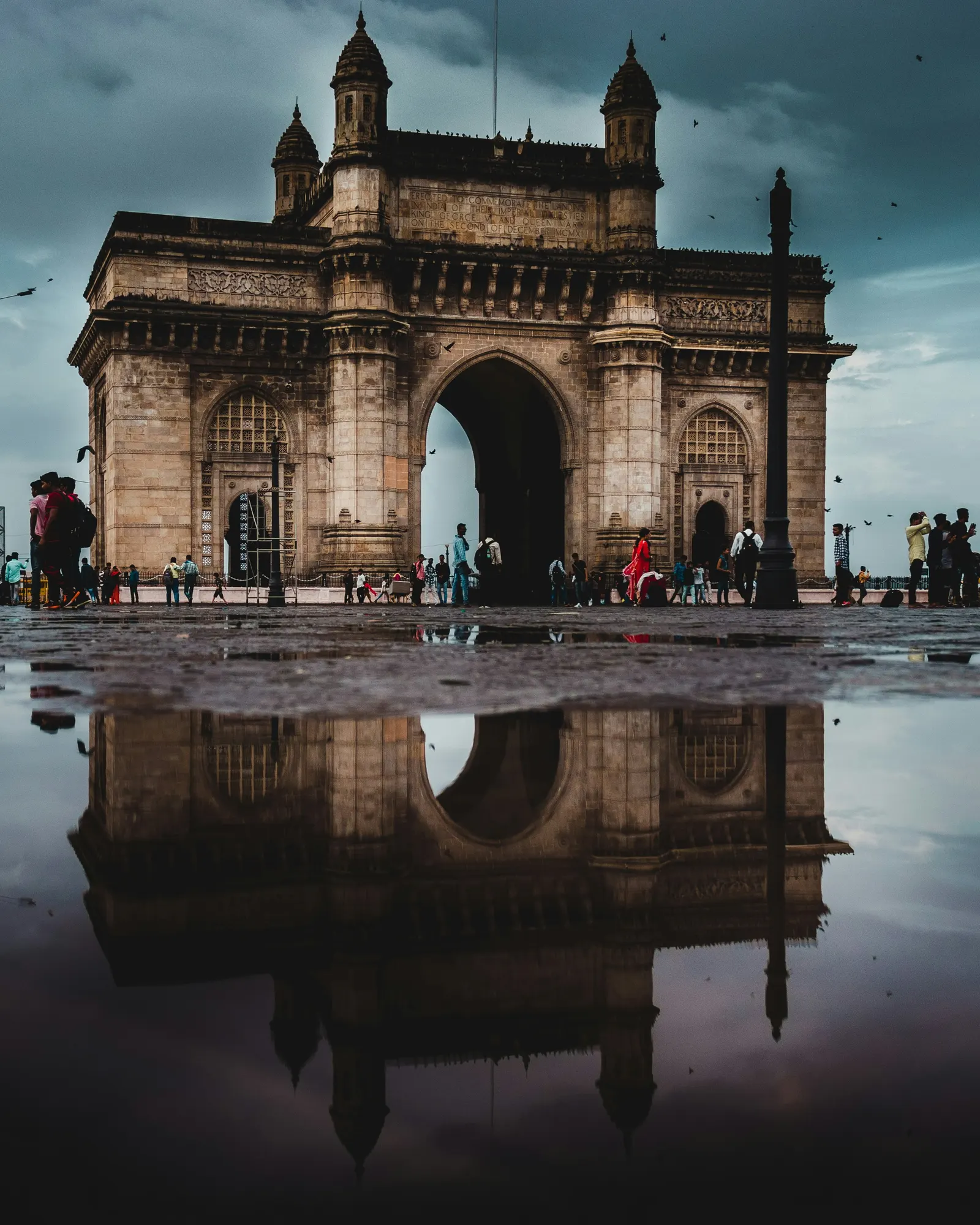
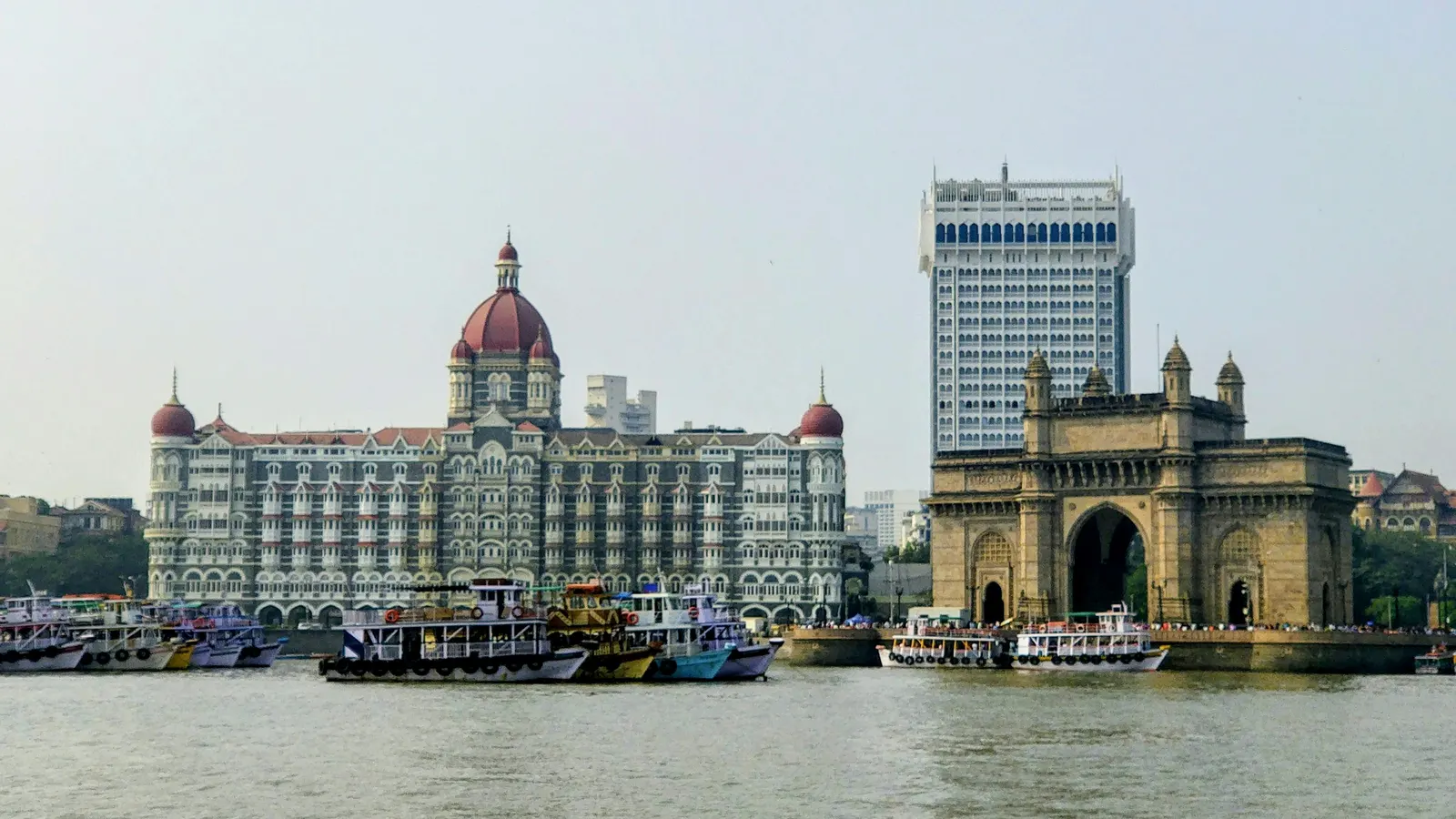
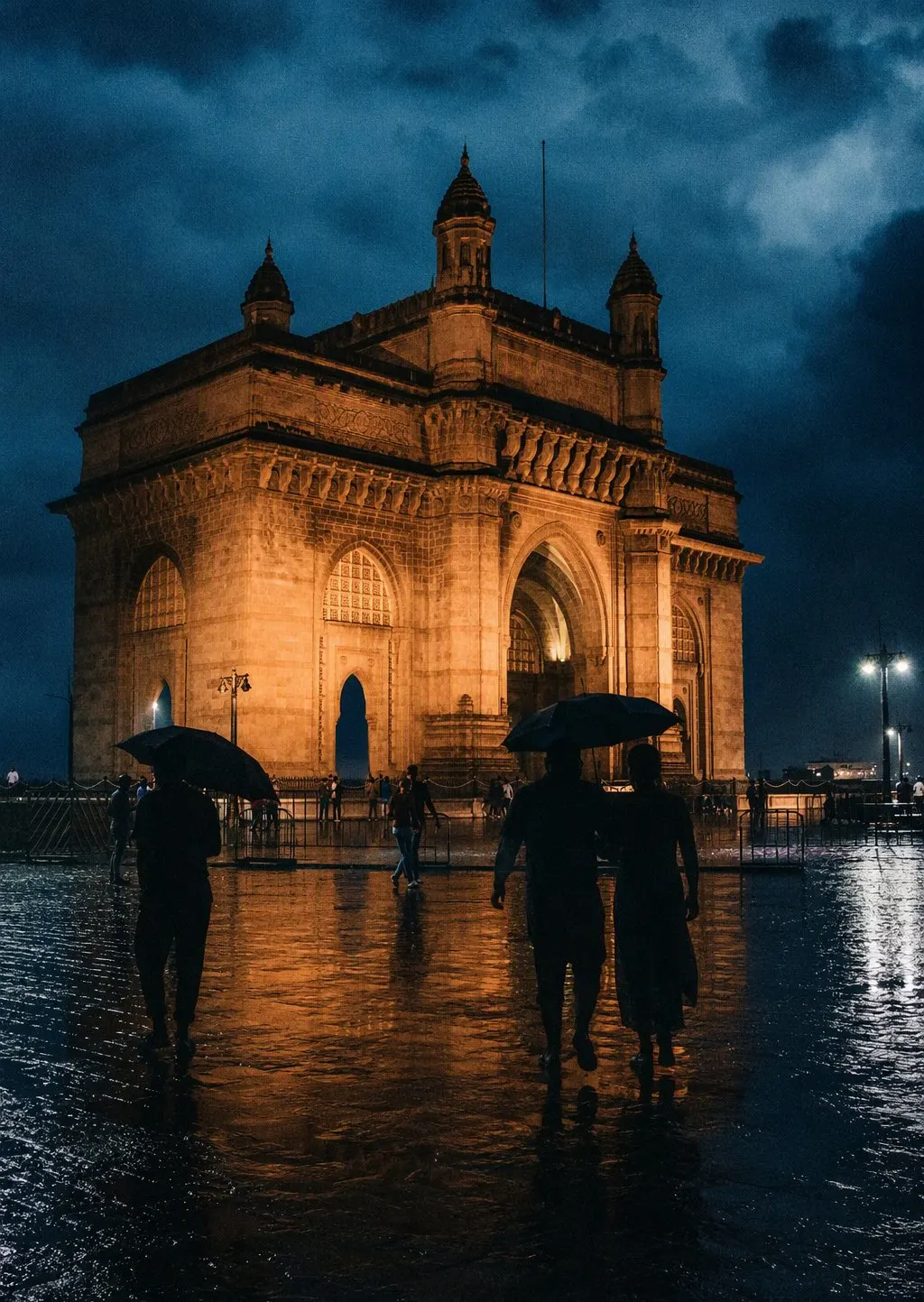
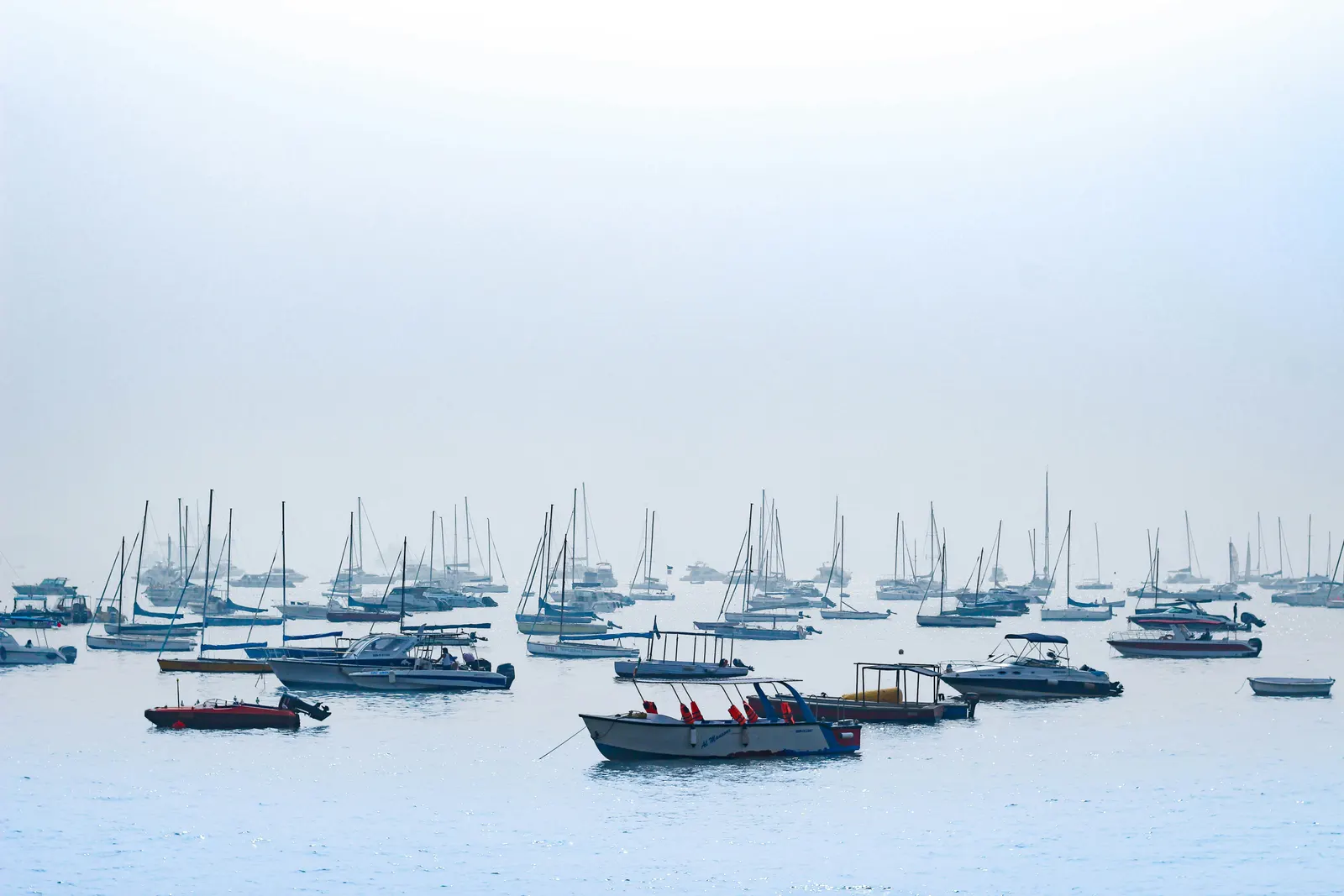
A harbour to begin with.
The Gateway is a beginning, rather than the whole day. Take in the arch, turn towards the harbour, then let the streets behind the waterfront lead you into Colaba. The best part is often the pause between the obvious photographs.
Behind the arch.
History · Why was the Gateway built?
A royal visit inspired the arch; the finished landmark followed years later.
Read moreRead less
The Gateway commemorates King George V and Queen Mary’s 1911 visit to Bombay. Designed by George Wittet, it was inaugurated on 4 December 1924.
Continue reading at Incredible India ↗Significance · An arrival by sea
The Gateway tells a story of Mumbai’s connection to the sea.
Read moreRead less
The monument recalls Bombay’s role as a maritime arrival point. Its ceremonial origins sit alongside its present-day role as a public landmark and a starting point for exploring the harbour.
Continue reading at Incredible India ↗Architecture · Look beyond the arch
Its stonework brings several architectural traditions into one landmark.
Read moreRead less
Notice the yellow basalt, the central dome and the details around the turrets. The design brings together Indian and European architectural influences.
Continue reading at Incredible India ↗On the waterfront.
The waterfront can be crowded and exposed to the sun. Keep walking routes clear, carry water, and check the return journey before adding a ferry or another neighbourhood.
A pause nearby
Colaba Causeway starts a few minutes’ walk behind the waterfront: street stalls, old cafés and plenty of places for a cold drink. Keep it to one short loop if your return plan is tight.
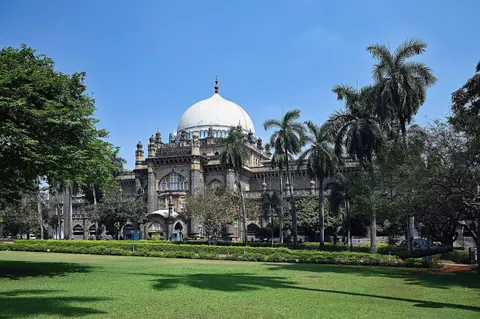 Kala Ghoda · Museum & garden
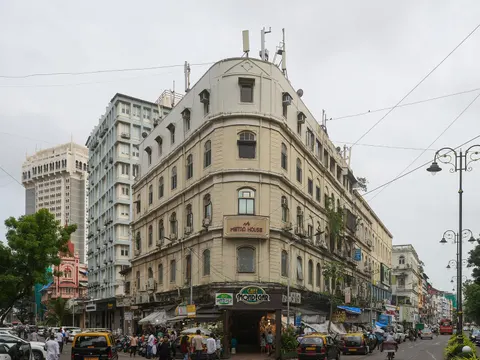 Colaba · Street stalls & old cafés
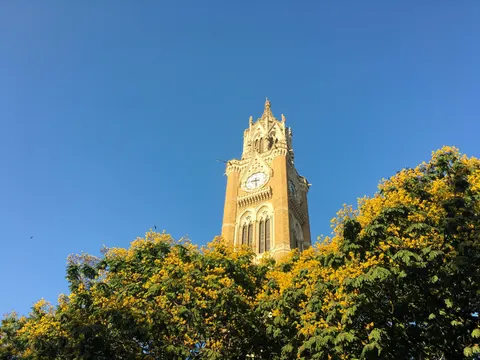 South Mumbai · Heritage streets